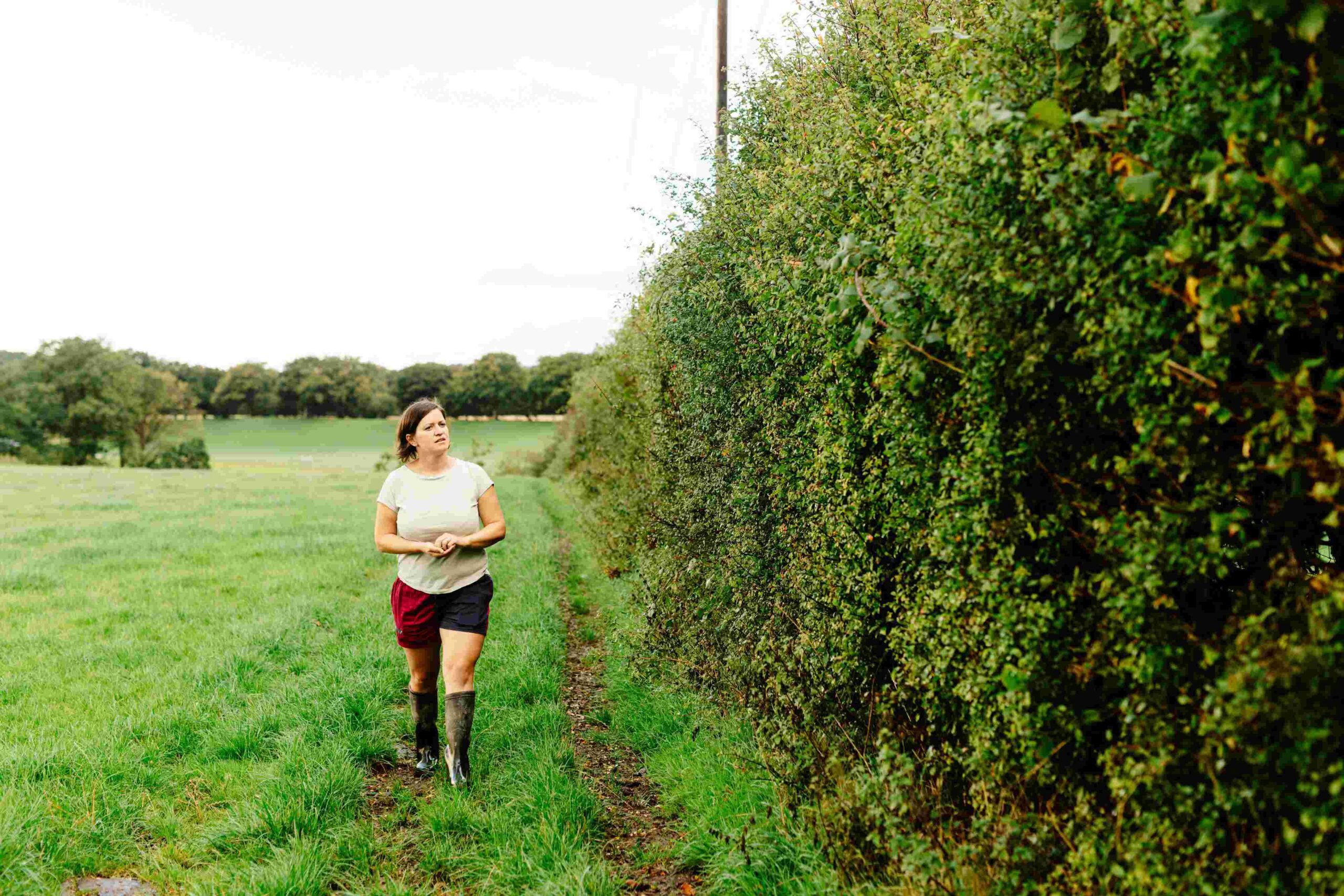
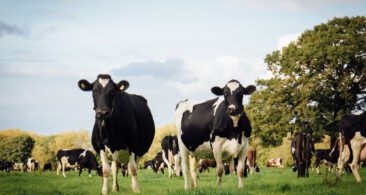
"The natural world is such an important part of our day-to-day lives and we’re on a journey to understand how our farming impacts the land and the wider environment.”
Claire Jones, dairy farmer, Wales
Farming for the Future
Farming for the Future (also known as AHDB’s Environment Baselining Pilot) is a project to assess some of the key environmental impacts of farms and farming across Great Britain. 178 farms from across England, Scotland, and Wales are taking part in this groundbreaking 5-year pilot that runs until 2029. Participating farms include beef, lamb, dairy, pork, cereals, and oilseeds producers.
The specific objectives of the baselining pilot are:
To provide the farming industry with on-farm environmental data, focusing on greenhouse gas emissions and carbon stocks, building on national and international averages
To understand how British agriculture can play a critical role in reducing greenhouse gases, building carbon stocks, enhancing soil health, and supporting biodiversity
Enabling farmers to take insight-led action towards a more sustainable future
Farming for the Future is an AHDB-driven (Agriculture & Horticulture Development Board who own this website) initiative supported by Quality Meat Scotland and Hybu Cig Cymru – Meat Promotion Wales.
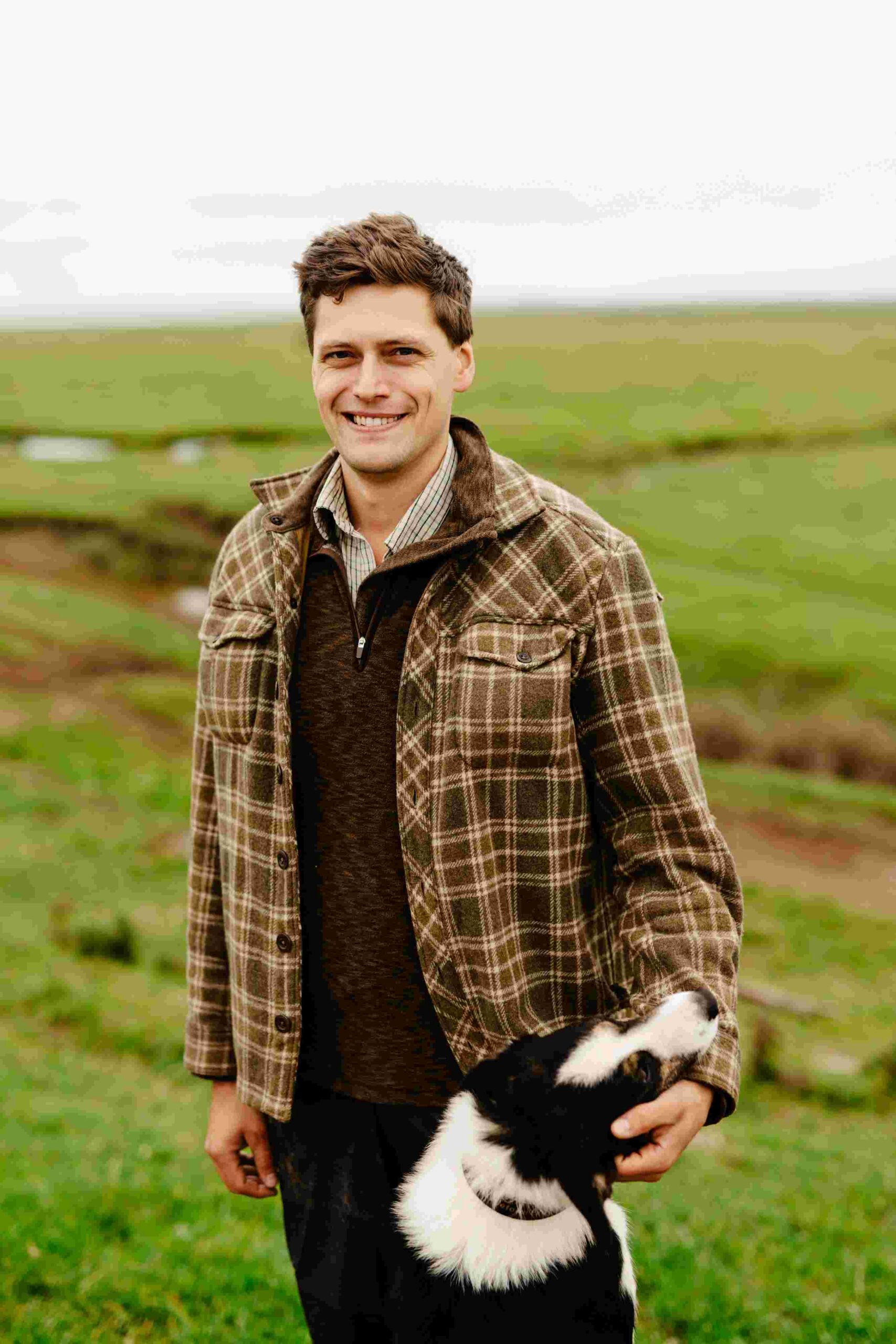
“As the custodian of over 5,000 acres of diverse landscapes, I believe that science, farming, and nature can work hand-in-hand.”
Ruari Martin, sheep farmer, Cumbria
How will it work?
The farms taking part in the pilot will work with AHDB and specialist contractors to deliver leading edge technological data collection and analysis. Together they’ll be monitoring the following:
Measuring carbon stored on each farm in soils, trees, hedges, across fields, woodland, and other areas
This helps show how much carbon the different parts of the farm (such as trees) are currently storing, giving a baseline for future tracking of how carbon storage changes over time
Do a carbon calculation (called a “carbon footprint”) to estimate each farm’s greenhouse gas emissions and carbon removals. A bespoke action plan is compiled to help the farmers focus on making positive changes
Map where rainwater flows off fields and take soil samples to assess various indicators of soil health. This is how the soil delivers various functions, such as carbon storage and water management
Together these will bring everything together into a clear starting point (“baseline”) for each farm’s environmental performance.
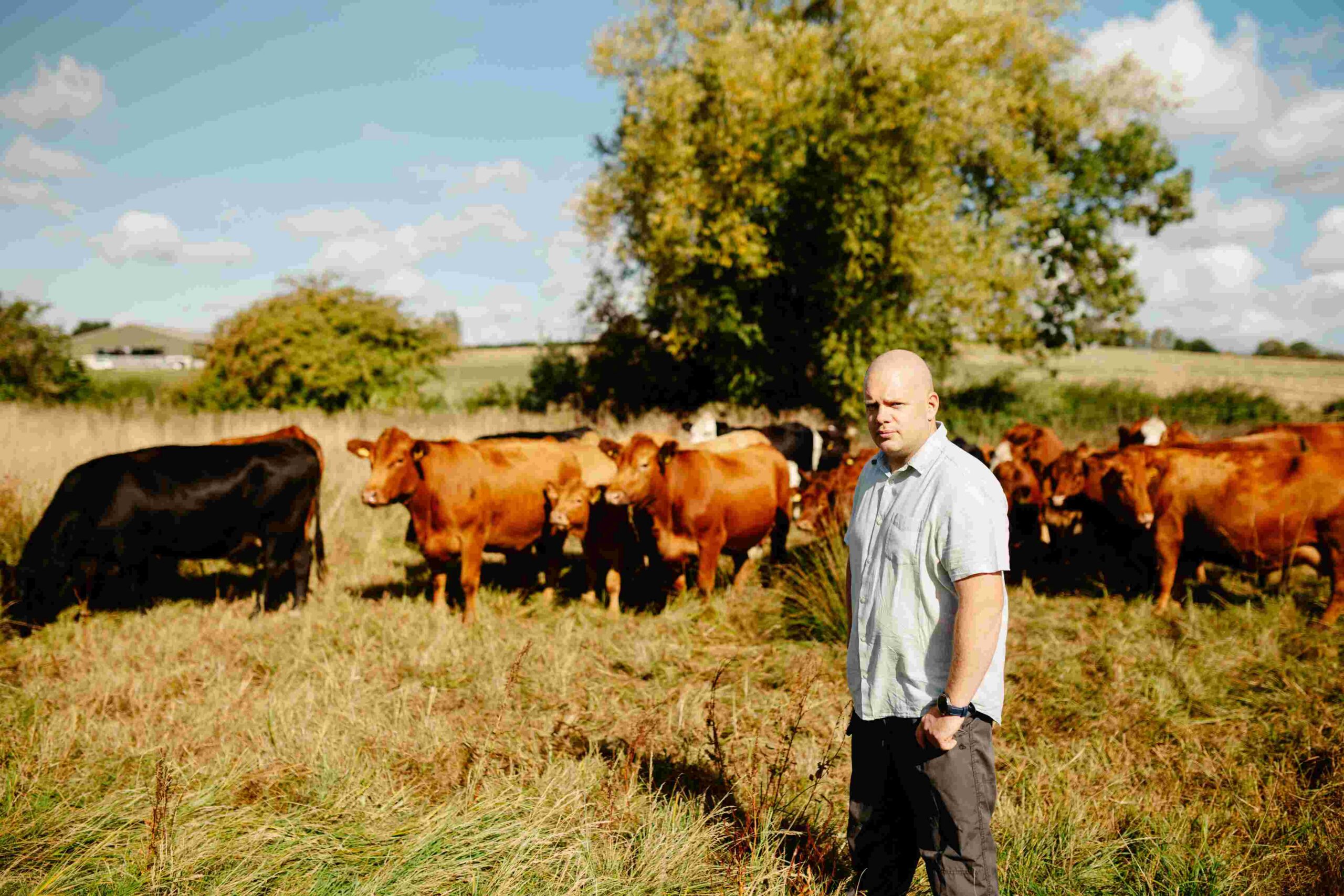
“As a farmer, I want to leave the land better than I found it for future generations.”
Mark Jelley, beef farmer, Northamptonshire
More than just a pilot
This project is about more than the pilot. This work supports farming’s contribution to achieving net zero as a nation, balancing the greenhouse gases we put into the air with the amount we take out and store.
More importantly, it will help farmers ensure that they can continue producing the nation’s food and enhancing the land for their families, and local communities for future generations.
We’ll be following the progress of our farmers throughout the project so for updates visit letseatbalanced.com or follow us on Instagram.
We use cookies to ensure that we give you the best experience on our website. If you continue to use this site we will assume that you are happy with this.