
Red meat can make an important contribution to healthy, balanced diets, providing a range of nutrients that support health throughout the life course. However, as conversations around food, health and sustainability become increasingly complex, healthcare professionals need access to balanced, evidence-based information to help inform dietary advice.
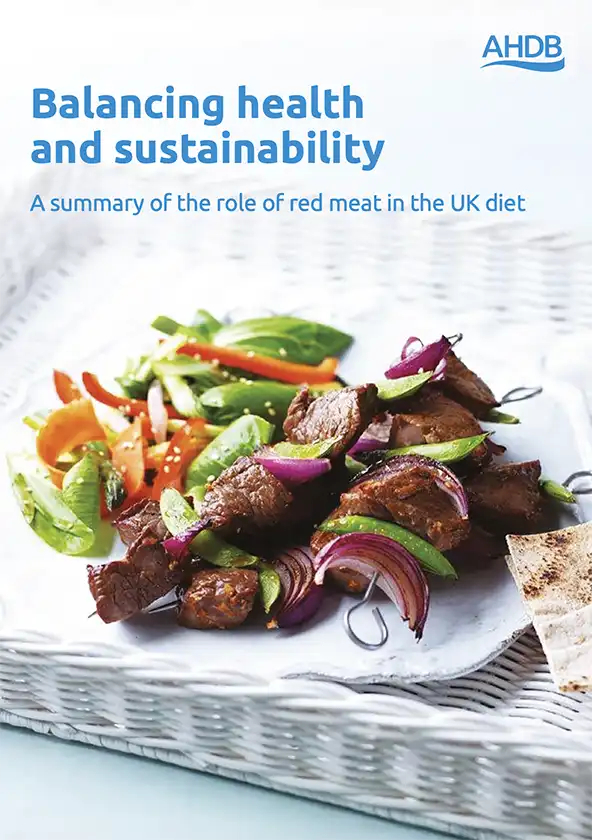
‘Balancing Health and Sustainability: The Role of Red Meat in the UK Diet‘ brings together the latest evidence on red meat’s contribution to nutrient adequacy, health outcomes and sustainable food systems.
Written by the human nutrition and environment teams at AHDB, in conjunction with independent expert nutritionists, the report explores the role of red meat within the context of whole dietary patterns, highlighting the importance of considering both nutritional value and environmental impact when discussing sustainable food choices.

Red meat and health
- Lean, unprocessed red meat is a nutrient-dense source of high-quality protein, bioavailable haem iron, zinc and B12.
- Vulnerable groups, such as children, adolescent girls, pregnant women and older adults frequently consume inadequate amounts of these nutrients. Reducing red meat intake may exacerbate nutrient deficiencies further.
- The majority of the UK population already eat red and processed meat within Government recommendations.
- The Eatwell Guide advises “if you eat more than 90g of red or processed meat a day, try to cut down to no more than 70g per day”. This equates to around 3-4 meals containing red meat (limiting processed meat) per week as part of a healthy, balanced diet.
- Whilst some groups, such as men aged 19-39, could benefit from reducing high meat intake, a ‘one size fits all’ approach is not appropriate.
- There is a lack of distinction between processed and unprocessed meat. This can lead to inaccurate assumptions that the advice and health risks are the same for all types of meat, creating confusion for consumers and healthcare professionals and underplaying the health benefits of lean, unprocessed red meat.
Red meat and the environment
- Well managed farming practices can help to support the UK’s net zero ambitions by offering environmental benefits such as carbon storage, biodiversity, and soil health.
- Understanding the unique properties of UK livestock systems, which are some of the most sustainable in the world, highlights the role that animals play in turning inedible plant parts and surplus food into nutritious products to meet global food challenges.
- Through circular farming systems, we can improve nutrient cycling, reduce demand for additional feed crop and transform waste into resources such as bioenergy.
- There is a growing global demand for red meat, especially from high income countries. Reducing UK production may increase reliance on products from countries with lower welfare or sustainability standards.
- Ongoing improvements in genetics, animal health and farming practices can play an important role in reducing environmental impacts while supporting efficient food production.
Read the reports here...
-
-
Balancing health and sustainability: Red meat - Full report